Peak holiday season compresses a quarter’s worth of sales opportunity — and risk — into a few critical weeks. A stockout that would be a minor issue in February can mean losing an entire season’s incremental sales in December. For CPG teams, knowing exactly what to monitor during this window, and reacting quickly to what the data shows, matters more than at almost any other time of year.
Why Peak Season Is Different
Demand during peak season is higher, more volatile, and less forgiving of delays than the rest of the year. Distribution and inventory decisions that would normally have weeks to correct themselves need to happen in days, because the sales window for many seasonal items and promotions is short and won’t come back around until next year.
Metrics to Watch Daily
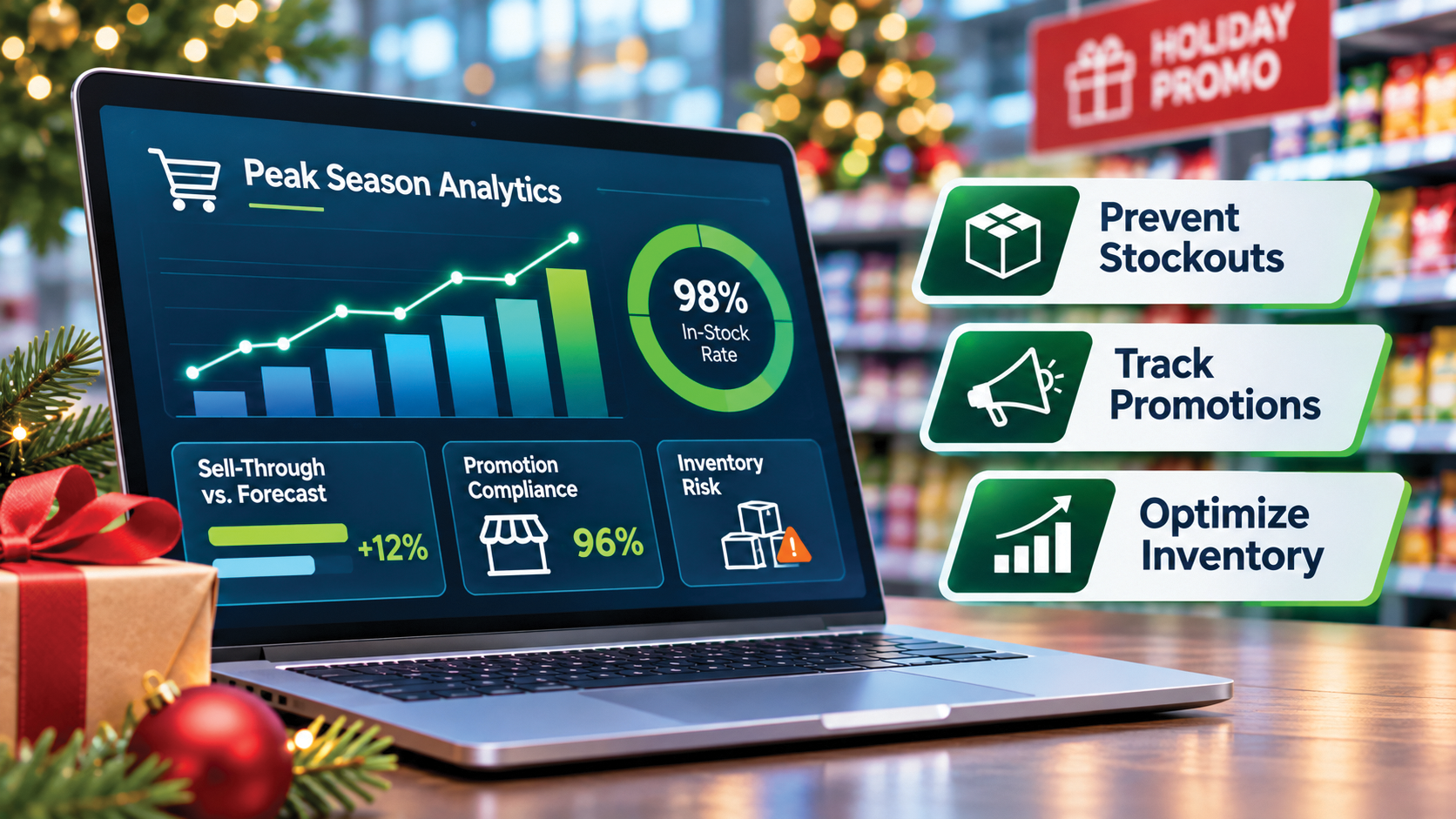
During peak season, the reporting cadence needs to tighten. Stockout and low-inventory alerts, daily sell-through versus forecast, and promotional display compliance are worth checking daily rather than weekly, since a gap that goes unnoticed for even a few days can mean a meaningful chunk of seasonal sales lost for good.
Avoiding Stockouts and Overstock
The two failure modes during peak season are mirror images of each other: running out of a fast-moving item at the worst possible time, or ending the season with excess inventory that has to be marked down or held over. Real-time visibility into sell-through by store lets teams catch both problems early enough to redirect inventory or adjust orders.
The Post-Season Debrief
Once peak season ends, the most valuable step is a structured review comparing what was forecasted against what actually happened — by SKU, by region, and by promotion. This debrief becomes the historical data that improves next year’s peak season plan, making each holiday season a little more predictable than the last.
Peak season rewards teams that can see problems in days, not weeks. The CPG organizations that monitor the right metrics closely during this window — and learn from it afterward — consistently capture more of the season’s opportunity than those relying on standard monthly reporting.
InfoBate gives CPG teams the real-time visibility needed to manage inventory, stockouts, and promotional compliance through peak holiday season — and the historical data to plan an even better one next year.
Frequently Asked Questions
Q: Why is peak holiday season riskier for CPG inventory management?
A: Demand is higher and more time-sensitive during peak season, so a stockout or distribution gap that would be minor at other times of year can mean losing an entire season’s worth of incremental sales.
Q: What metrics should CPG teams monitor daily during peak season?
A: Stockout alerts, daily sell-through versus forecast, and promotional display compliance are worth checking daily during peak season, since delays in catching issues are far more costly than during the rest of the year.
Q: What should happen after peak season ends?
A: A structured post-season review comparing forecasted versus actual performance by SKU, region, and promotion helps build better historical data and improves planning for the following year’s peak season.