With AI and predictive analytics dominating the forecasting conversation, it’s easy to overlook the most reliable input any forecast still depends on: clean, well-organized historical sales data. Even the most advanced forecasting model is only as good as the historical patterns it learns from — which makes getting the fundamentals of historical data right just as important as the algorithm layered on top.
Why Historical Data Still Matters in the AI Era
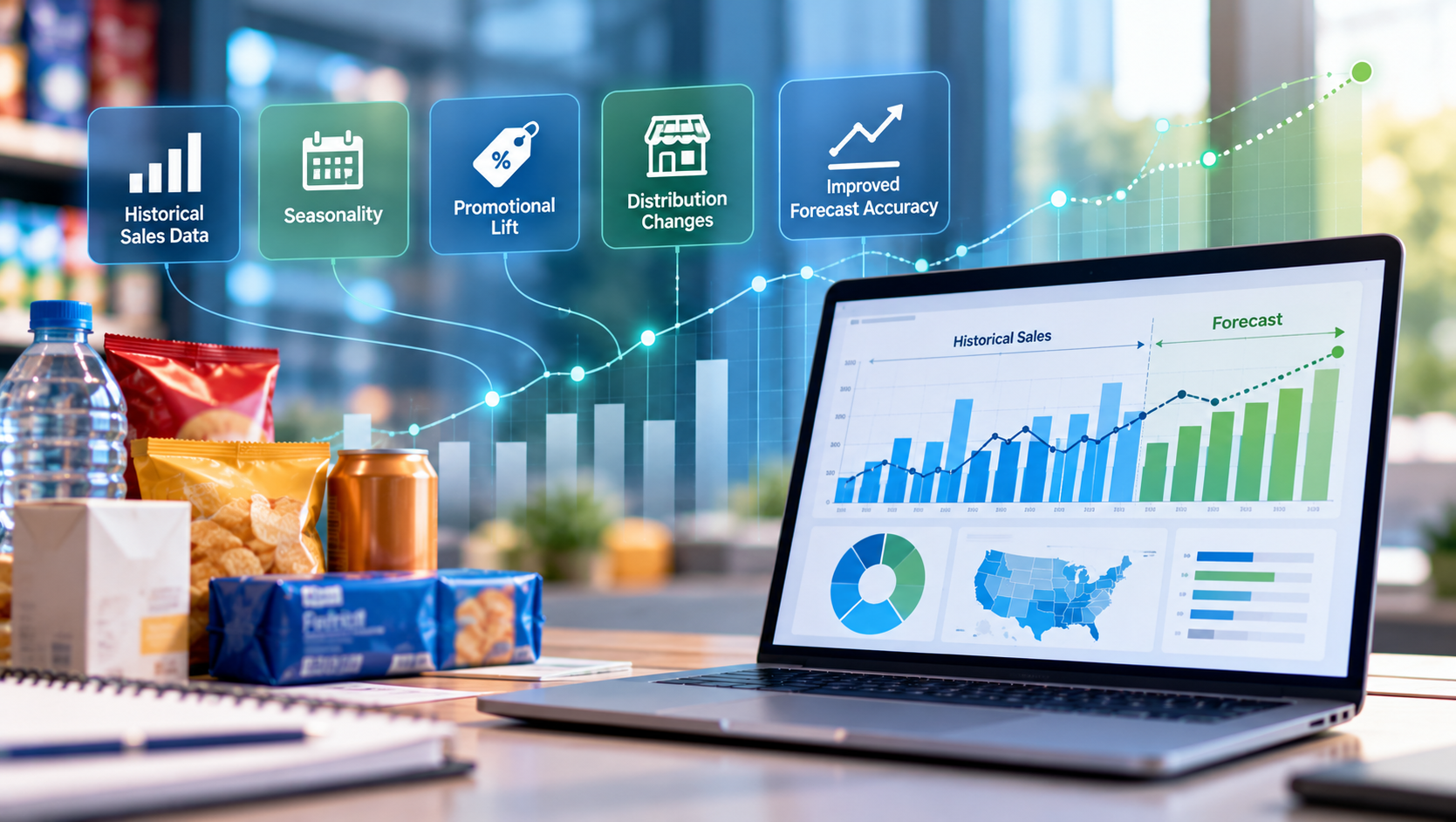
Predictive models don’t replace historical data — they depend on it. Seasonal patterns, promotional lift, and category trends are all learned from history before a model can project forward. CPG teams that have clean, granular historical shipment and sell-through data have a real advantage over those trying to forecast from incomplete or inconsistent records.
Common Forecasting Pitfalls
The most common forecasting mistakes come from historical data problems: not separating promotional lift from baseline demand, not accounting for distribution changes that affected past sales, and using data that’s too aggregated to reveal store-level or regional patterns that actually matter for planning.
Building Better Forecasts With Historical Data
Better forecasting starts with cleaning up these issues — isolating baseline demand from promotional spikes, adjusting for distribution gains or losses over time, and keeping data granular enough to spot regional or seasonal patterns that get lost in a national-level view. This groundwork pays off directly in forecast accuracy.
Combining History With Real-Time Signals
The best forecasts combine solid historical data with real-time signals — current sell-through, weather, and local events — that historical data alone can’t capture. Getting the historical foundation right first makes those real-time adjustments far more reliable.
Forecasting accuracy doesn’t come from a more sophisticated algorithm alone — it comes from feeding that algorithm clean, granular, well-understood historical data. CPG teams that get this foundation right see the benefit in every forecast built on top of it.
InfoBate organizes historical shipment and sell-through data into a clean, granular foundation CPG teams can trust — making every forecast built on top of it more accurate.
Frequently Asked Questions
Q: Why does historical sales data still matter for CPG forecasting?
A: Even AI-driven forecasting models rely on historical data to learn seasonal patterns, promotional lift, and category trends before they can project forward accurately.
Q: What are common mistakes when using historical data for forecasting?
A: Common mistakes include not separating promotional lift from baseline demand, ignoring past distribution changes, and using data that’s too aggregated to reveal regional or store-level patterns.
Q: How should CPG teams combine historical and real-time data for forecasting?
A: The most accurate forecasts start with a clean historical baseline and then layer in real-time signals like current sell-through, weather, and local events to adjust for what history alone can’t predict.