The food and beverage industry continues to face unprecedented challenges in 2026. From shifting consumer demand and transportation disruptions to evolving regulations and global sourcing complexities, manufacturers are under pressure to build supply chains that can adapt quickly to change.
Organizations that prioritize supply chain resilience are better positioned to minimize risk, maintain product availability, and meet customer expectations regardless of market conditions.
What Is Supply Chain Resilience?
Supply chain resilience refers to a company’s ability to anticipate, respond to, and recover from disruptions while maintaining business continuity.
For food and beverage manufacturers, resilience means having the processes, partnerships, and visibility necessary to navigate challenges such as:
- Supplier disruptions
- Raw material shortages
- Transportation delays
- Labor shortages
- Food safety incidents
- Regulatory changes
- Extreme weather events
A resilient supply chain doesn’t eliminate risk—it helps organizations respond more effectively when challenges arise.
Why Supply Chain Resilience Matters More Than Ever
Consumer expectations continue to evolve. Customers expect consistent product availability, reliable delivery schedules, and transparency throughout the supply chain.
At the same time, manufacturers must manage rising costs and increasing complexity across sourcing, production, and distribution networks.
Organizations that invest in resilience can often:
- Improve customer satisfaction
- Reduce operational disruptions
- Strengthen supplier relationships
- Improve forecasting accuracy
- Minimize inventory shortages
- Enhance business continuity
These benefits contribute to long-term competitiveness in an increasingly dynamic marketplace.
Key Strategies for Building a Resilient Supply Chain
Diversify Supplier Networks
Relying heavily on a single supplier or geographic region can increase risk. Many manufacturers are expanding supplier networks to create additional sourcing options and reduce dependency on a single source.
Strong supplier partnerships can also improve communication and collaboration during disruptions.
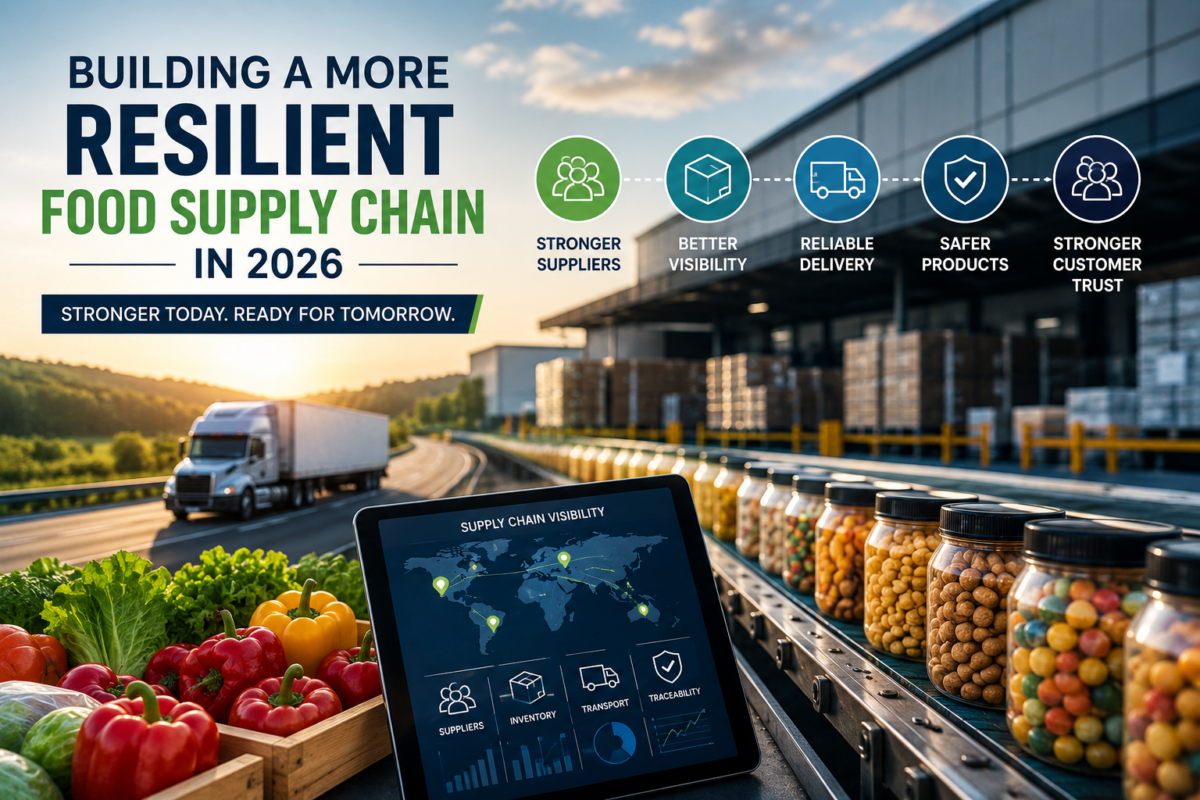
Improve Supply Chain Visibility
Visibility remains one of the most important components of resilience.
Manufacturers that have access to timely and accurate information can identify potential issues earlier and make informed decisions more quickly.
Areas where visibility is particularly important include:
- Supplier performance
- Inventory levels
- Transportation status
- Production capacity
- Demand forecasting
Strengthen Inventory Management Practices
Maintaining the right inventory balance is critical.
Too much inventory can increase carrying costs, while too little inventory can create shortages and service disruptions.
Organizations are increasingly focusing on demand planning and inventory optimization strategies to improve flexibility and responsiveness.
Invest in Food Safety and Traceability
Food safety remains a top priority throughout the industry.
Traceability initiatives help manufacturers quickly identify affected products during recalls, improve compliance efforts, and strengthen consumer confidence.
A well-documented supply chain can significantly reduce response times when issues arise.
The Role of Collaboration
Building resilience is not solely an internal effort.
Manufacturers, suppliers, distributors, retailers, and logistics providers all play important roles in maintaining supply chain stability.
Organizations that foster stronger communication and collaboration across their partner network are often better prepared to respond to unexpected challenges.
Regular communication can help identify potential risks before they become major disruptions.
Preparing for the Future
While no company can predict every disruption, manufacturers can take proactive steps to improve preparedness.
Questions organizations should consider include:
- Are supplier relationships diversified?
- Is critical inventory monitored effectively?
- Are contingency plans documented?
- Is product traceability well established?
- Are communication processes clearly defined?
The answers to these questions can reveal opportunities to strengthen resilience and reduce operational risk.
Looking Ahead
Supply chain resilience will remain a strategic priority for food and beverage manufacturers throughout 2026 and beyond.
Companies that focus on visibility, collaboration, traceability, and proactive planning are better positioned to navigate uncertainty while continuing to serve customers and grow their business.
As the industry evolves, resilience will become a key differentiator for organizations seeking long-term success in an increasingly complex marketplace.