Convenience retail is becoming increasingly competitive. Store operators are managing changing consumer expectations, evolving product categories, promotional programs, pricing pressures, and the constant need to improve store-level performance.
In 2026, one factor is becoming increasingly important across the convenience store industry: data.
Convenience retailers, CPG suppliers, manufacturers, and distributors generate enormous amounts of sales and operational information. The organizations gaining the greatest value from that information are not simply collecting more data. They are using it to identify opportunities, improve execution, optimize promotions, and make more profitable decisions.
For convenience store operators and their CPG partners, better data visibility can provide a clearer picture of what is selling, where opportunities exist, and which actions are producing measurable results.
Why Data Matters in the Convenience Store Industry
Every transaction creates information that can help businesses better understand store performance.
Sales data can reveal:
Which products are gaining or losing momentum
Which stores are outperforming others
How individual categories are performing
Where product distribution opportunities exist
Which promotions are generating incremental sales
Where out-of-stock conditions may be affecting revenue
How retailer programs are performing
How customer purchasing patterns are changing
The challenge is turning that information into actionable business intelligence.
A spreadsheet showing thousands of transactions may contain valuable information, but the value comes from identifying the trends and opportunities hidden within the data.
Using Store-Level Sales Data to Identify Opportunities
Aggregate sales numbers provide a useful overview, but store-level data can reveal opportunities that broader reporting may miss.
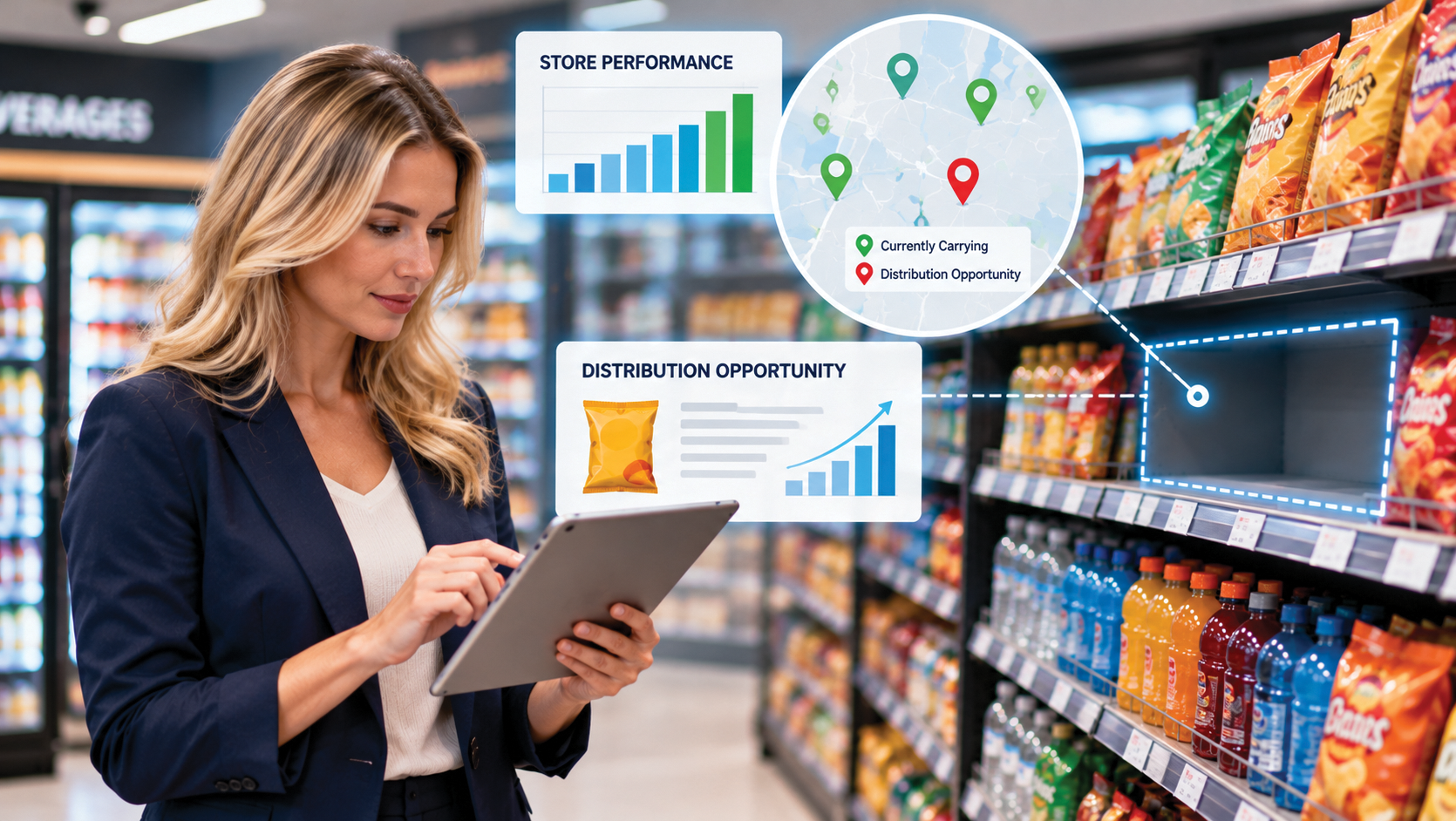
Consider a product performing well across a retail chain. Total sales may look strong, but store-level analysis could reveal that the product performs exceptionally well in some locations while remaining unavailable or underrepresented in others.
That information creates an opportunity.
CPG suppliers and convenience retailers can use store-level sales data to identify:
- High-performing locations
- Underperforming stores
- Product distribution gaps
- Regional sales trends
- Potential product voids
- New placement opportunities
Instead of relying on assumptions, teams can prioritize opportunities based on measurable performance.
Improving Product Distribution
Distribution is one of the most important drivers of CPG growth.
A strong product cannot generate sales if consumers cannot find it.
Data analytics can help suppliers and retailers identify locations where products should be available but are currently missing.
These distribution insights can support decisions around:
- New store placements
- Product assortment
- Category expansion
- Retailer conversations
- Field sales priorities
- New product launches
Improving distribution strategically allows businesses to focus resources on locations with the greatest potential.
Reducing Out-of-Stock Opportunities
An out-of-stock product represents more than an inventory problem. It can also represent lost revenue and a poor customer experience.
Store-level data can help organizations identify unusual changes in product movement that may signal availability issues.
When teams have better visibility into store performance, they can investigate potential problems earlier and work with retail partners to address them.
Reducing out-of-stock situations can support:
- Improved product availability
- Higher sales
- Better customer experiences
- Stronger retailer relationships
- More consistent store execution
- Using Data to Improve Trade Promotions
Trade promotions represent a significant investment for many CPG manufacturers and suppliers.
Data allows organizations to move beyond simply asking whether a promotion increased sales.
Teams can evaluate:
- Promotional sales lift
- Incremental revenue
- Retailer participation
- Store-level execution
- Trade program compliance
- Promotional ROI
- Performance by location
- Performance by product
This creates a more complete picture of whether promotional investments are producing meaningful results.
For a deeper look at promotion measurement, read Measuring Trade Promotion Effectiveness: The KPIs Every CPG Team Should Track in 2026.
Measuring Trade Program Compliance
A promotion can look excellent on paper and still underperform if it is not executed correctly at the store level.
That makes trade program compliance an important part of convenience retail analytics.
Organizations can monitor factors such as:
- Retailer participation
- Promotional pricing
- Product placement
- Display execution
- Program timing
- Sales performance
- Incentive requirements
Better compliance visibility helps CPG suppliers understand whether agreed-upon programs are actually being executed.
It also creates greater accountability between manufacturers, distributors, and retailers.
Learn more in Why Trade Program Compliance Matters More Than Ever in 2026.
Tracking the Right Convenience Store KPIs
Data becomes most useful when organizations focus on the metrics that directly influence performance.
Important convenience store and CPG KPIs may include:
- Sales growth
- Unit sales
- Product velocity
- Distribution growth
- Sales by store
- Sales by category
- Promotional ROI
- Incremental sales lift
- Retailer compliance
- Out-of-stock trends
- Trade spend performance
- Pay for Performance achievement
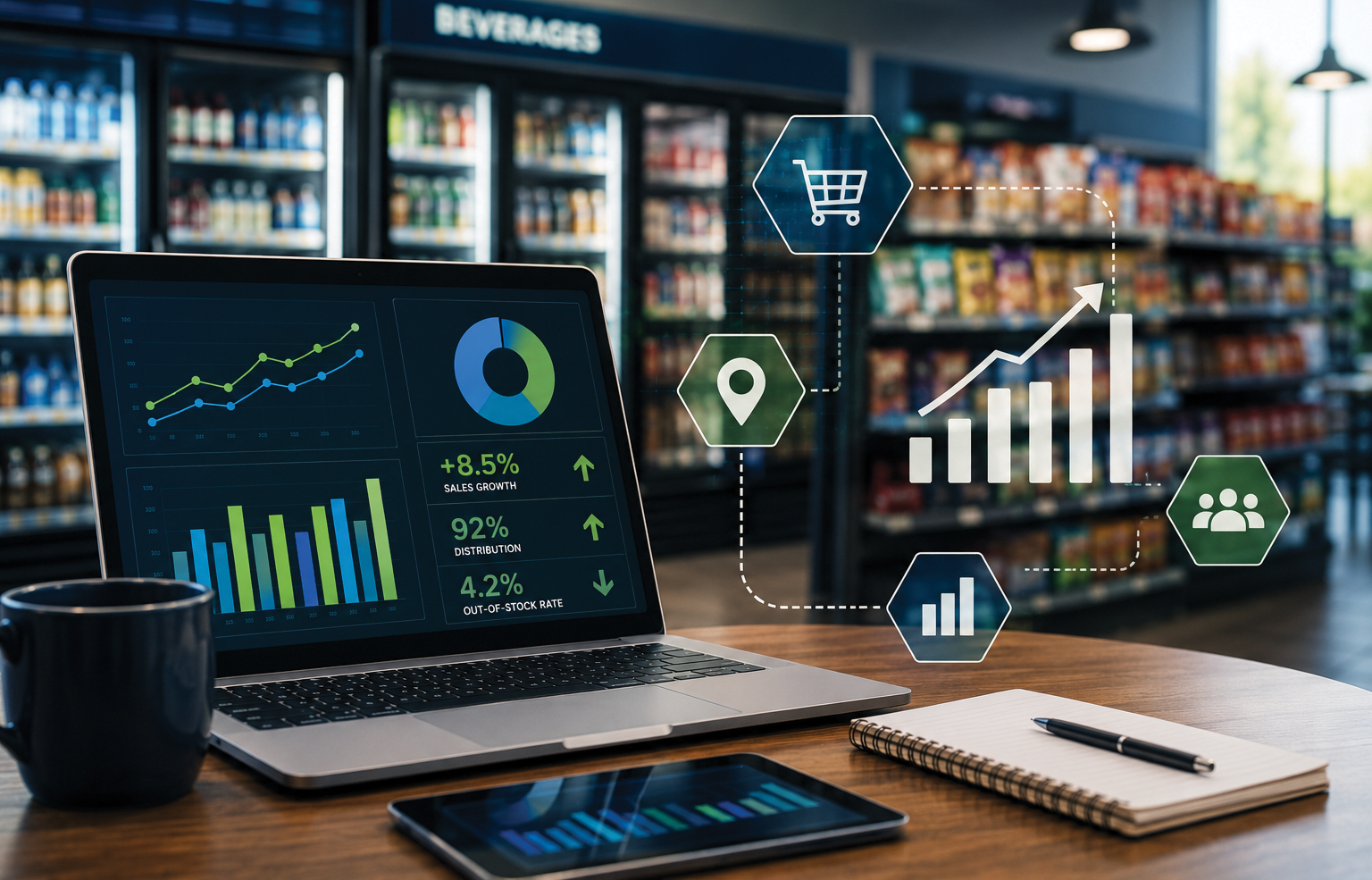
Dashboards can help teams monitor these metrics without relying on disconnected reports.
For more information about KPI strategy, visit What Every CPG KPI Dashboard Should Measure in 2026.
Turning Convenience Store Data Into Business Intelligence
Having more data does not automatically produce better decisions.
The real objective is transforming raw information into insights that teams can act on.
Effective business intelligence can help convenience retailers and CPG suppliers answer questions such as:
Which products are driving growth?
Which stores represent the greatest opportunity?
Where are distribution gaps occurring?
Which retailers are executing promotions successfully?
Which programs generate the strongest ROI?
Which categories are gaining momentum?
Where should sales teams focus their attention?
When these questions can be answered quickly, organizations can spend less time compiling reports and more time acting on opportunities.
Strengthening CPG Supplier and Retailer Relationships
Data also creates a common language between CPG suppliers and convenience retailers.
Instead of discussions based primarily on assumptions or anecdotal observations, both parties can evaluate measurable performance.
Data-driven retailer conversations can focus on:
Category growth
Product performance
Distribution opportunities
Promotional results
Compliance
Consumer purchasing trends
Store-level opportunities
This creates an opportunity for CPG suppliers to become more strategic partners to their retail customers.
Read How CPG Suppliers Can Improve Retailer Relationships in 2026 for additional strategies.
Using Historical Data to Make Better Decisions
Current performance tells businesses what is happening today. Historical data adds context.
Comparing current results with previous weeks, months, quarters, and years can help organizations identify:
- Seasonal patterns
- Long-term category trends
- Promotional performance changes
- Store growth patterns
- Product lifecycle changes
- Emerging opportunities
Historical comparisons can also help teams determine whether a sudden sales increase represents sustainable growth or a temporary event.
From Reporting to Action
One of the most important changes in data-driven convenience retail is the shift from reporting to action.
A report might show that a product is underperforming.
Actionable business intelligence helps determine what should happen next.
For example:
Data: A product’s sales declined at several stores.
Insight: The decline is concentrated in locations where product availability has changed.
Action: Prioritize those stores for investigation and corrective action.
This progression from data to insight to action is where analytics begins creating measurable business value.
Best Practices for Using Convenience Store Data
Focus on Actionable KPIs
Avoid tracking metrics simply because they are available. Prioritize measurements tied directly to business objectives.
Analyze Store-Level Performance
Chain-wide averages can hide important differences between individual locations.
Compare Current and Historical Results
Historical context helps teams distinguish short-term fluctuations from meaningful trends.
Monitor Promotions Throughout the Program
Do not wait until a promotion ends to evaluate execution and performance.
Share Insights Across Partners
Manufacturers, suppliers, distributors, and retailers can make better decisions when they work from consistent information.
Review Opportunities Regularly
Data analysis should be an ongoing business process rather than an occasional reporting exercise.
Frequently Asked Questions About Convenience Store Data Analytics
How do convenience stores use data analytics?
Convenience stores can use data analytics to monitor sales, category performance, product velocity, promotions, distribution, store execution, and other performance indicators. These insights help operators and their CPG partners identify opportunities and make more informed decisions.
What convenience store KPIs should businesses track?
Important KPIs can include sales growth, unit sales, product velocity, distribution growth, promotional ROI, store-level sales, retailer compliance, out-of-stock trends, and category performance.
How can CPG suppliers use convenience store sales data?
CPG suppliers can use store-level sales data to identify distribution opportunities, evaluate product performance, measure promotions, prioritize retail locations, and support more productive retailer conversations.
How can data improve convenience store profitability?
Data can help businesses identify sales opportunities, reduce execution gaps, improve product availability, optimize promotions, and focus resources on activities that produce measurable returns.
Why is store-level data important?
Store-level data reveals differences between individual retail locations that may be hidden by chain-wide or regional averages. This can help teams identify specific distribution, sales, and execution opportunities.
How does business intelligence help convenience retailers?
Business intelligence transforms sales and operational data into dashboards, trends, KPIs, and actionable insights that help decision-makers identify opportunities faster.
Can data improve retailer and supplier relationships?
Yes. Shared performance information creates greater transparency and gives retailers and suppliers a measurable foundation for discussing product performance, promotions, distribution, and growth opportunities.
Looking Ahead
The convenience store industry continues to evolve, and the businesses that understand their data will be better positioned to evolve with it.
For convenience retailers, CPG manufacturers, suppliers, and distributors, the opportunity is not simply to collect more information. It is to identify the information that matters and turn it into action.
Better visibility can help organizations uncover distribution opportunities, improve trade program execution, strengthen retailer relationships, optimize promotional investments, and ultimately improve profitability.
As competition increases throughout the convenience channel, data-driven decision-making will continue to become an important differentiator.
Explore additional articles on CPG business intelligence, convenience retail, trade promotion, and performance analytics in the InfoBate News Center.