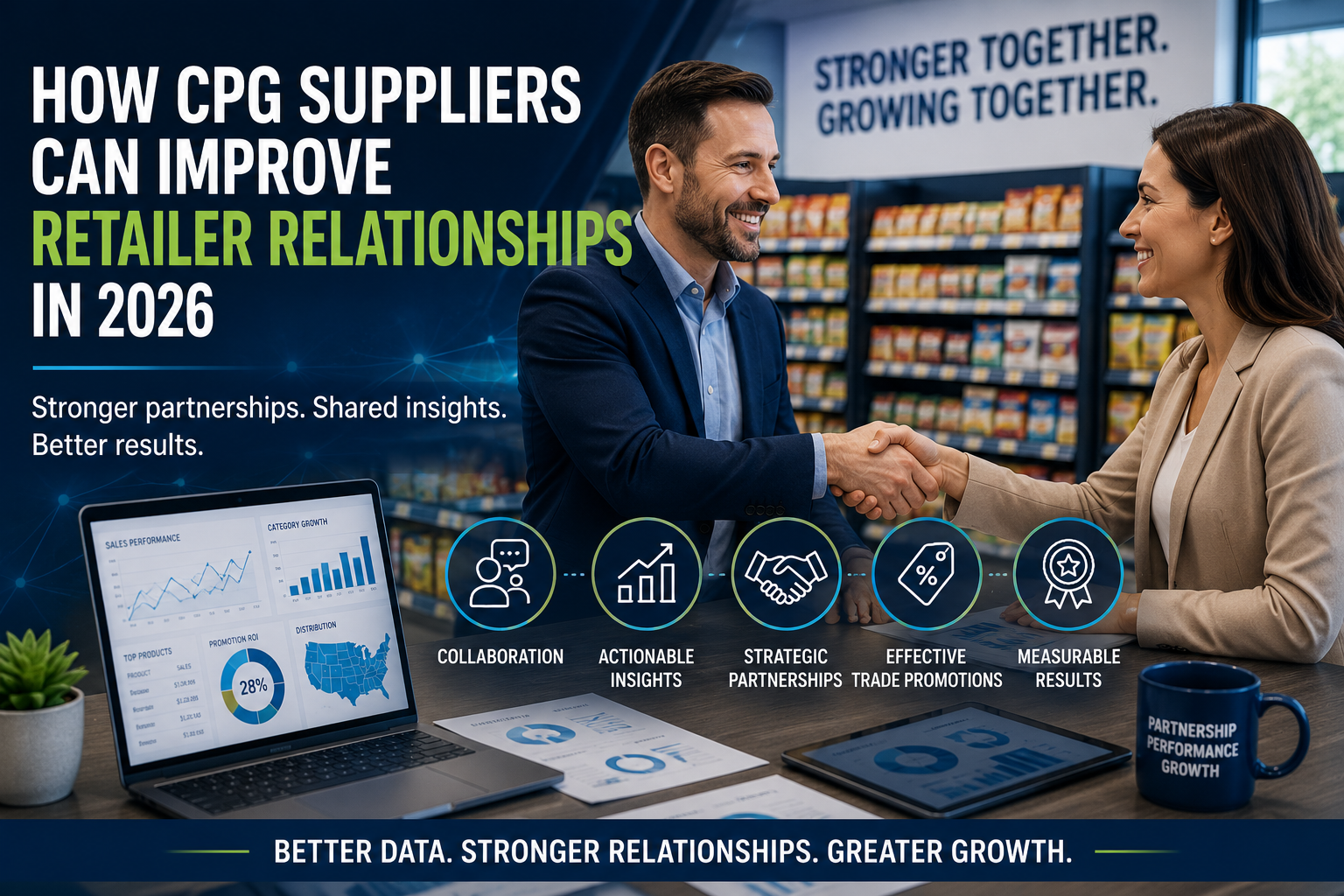
Retailer relationships have always been central to success for CPG suppliers, but in 2026 those relationships are becoming more data-driven, collaborative, and performance-focused.
Today’s retailers expect more than quality products. They want supplier partners that bring measurable value through stronger category performance, better promotional execution, improved trade program visibility, and actionable business insights.
For CPG suppliers, improving retailer relationships means moving beyond transactional conversations and building partnerships based on transparency, shared goals, and continuous improvement.
Why Retailer Relationships Matter for CPG Suppliers
Retailers have more choices than ever when deciding which suppliers to work with, promote, and prioritize. As competition increases, CPG suppliers must demonstrate that they can support growth, improve execution, and help retailers make better decisions.
Strong retailer relationships can help suppliers:
- Increase shelf presence
- Improve promotional performance
- Strengthen category growth
- Support better convenience store execution
- Improve trade program compliance
- Create stronger long-term partnerships
The Biggest Challenges Facing CPG Suppliers
Limited Performance Visibility
Many suppliers struggle to access timely and accurate performance data. Without clear visibility into sales, promotions, and retailer execution, it becomes difficult to understand what is working and where improvements are needed.
Communication Gaps
Manual updates, delayed reporting, and inconsistent communication can create misalignment between suppliers and retailers.
Promotion Effectiveness
Trade promotion programs require careful planning, execution, and measurement. When suppliers cannot clearly measure promotional ROI, retailer conversations become more difficult.
Share Actionable Business Insights
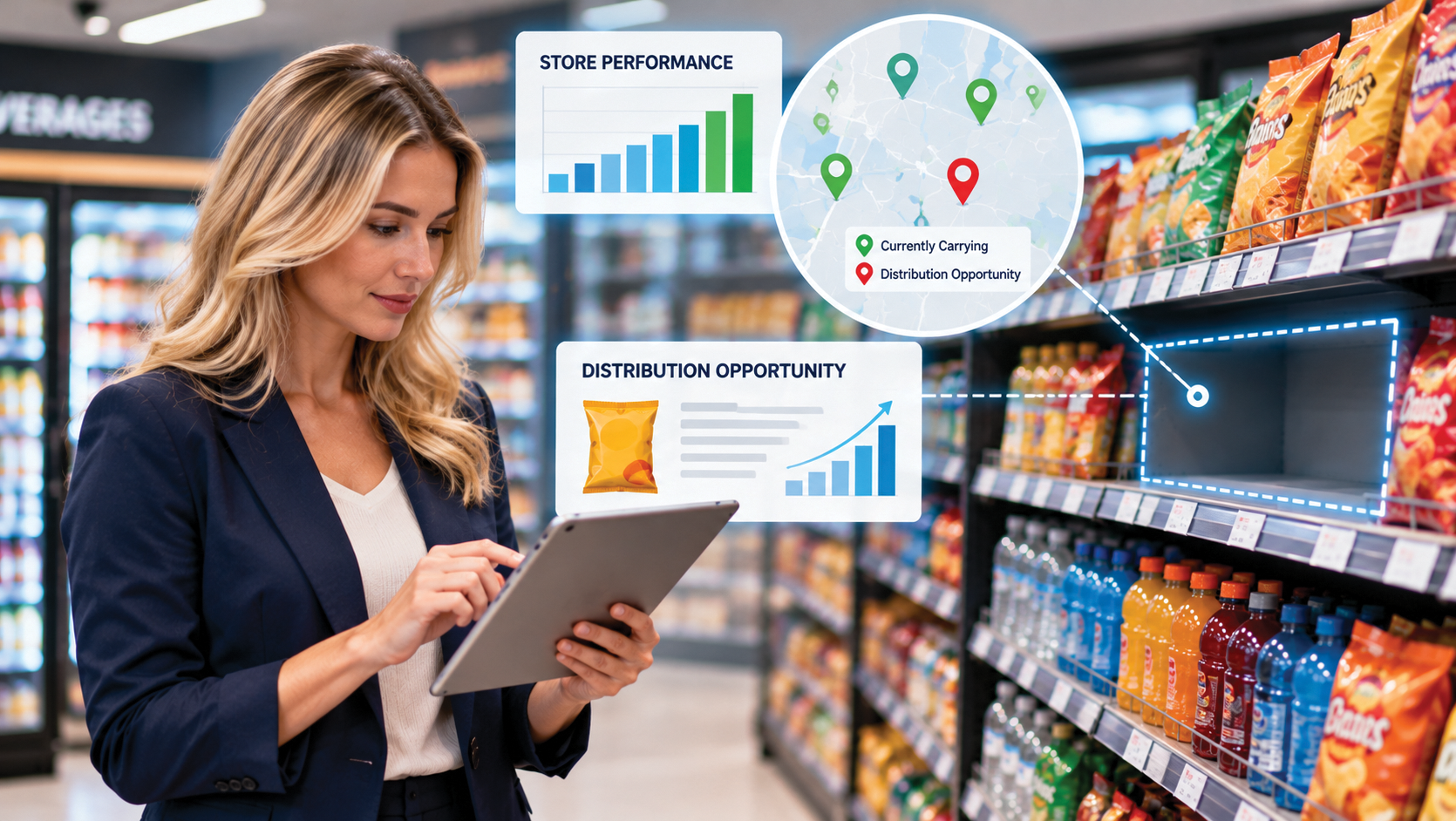
Retailers value suppliers that bring meaningful insights to the table. Instead of focusing only on product availability or pricing, leading CPG suppliers are using business intelligence to identify opportunities for growth.
Helpful insights may include:
- Category performance trends
- Store-level sales patterns
- Promotional ROI
- Product velocity
- Distribution opportunities
- Customer purchasing behavior
For more on this topic, read How Business Intelligence Improves CPG Performance in 2026.
Focus on Category Growth
Retailers are looking for supplier partners that can help grow the overall category, not just sell individual products.
CPG suppliers can strengthen retailer relationships by identifying product trends, recommending assortment improvements, supporting promotional planning, and helping retailers better understand customer demand.
Improve Trade Promotion Planning
Trade promotion remains an important part of retailer collaboration. However, promotions must be planned with clear goals and measurable outcomes.
Suppliers should work with retailers to define:
- Promotion objectives
- Target customers
- Expected sales lift
- Execution requirements
- Compliance expectations
- Post-promotion review criteria
Learn more in Why Trade Spend Optimization Is a Top Priority for CPG Manufacturers in 2026.
Use KPI Dashboards to Support Better Conversations
CPG KPI dashboards help suppliers and retailers focus on shared metrics instead of assumptions. When both sides can review consistent performance data, conversations become more productive and action-oriented.
Important retailer relationship KPIs may include:
- Sales growth
- Product velocity
- Distribution growth
- Promotion participation
- Retailer compliance
- Pay for performance results
- Trade spend ROI
- Category performance
For related insights, read What Every CPG KPI Dashboard Should Measure in 2026.
Strengthen Trade Program Compliance
Trade program compliance is essential for building trust. When promotional agreements, display programs, or performance-based incentives are not executed correctly, both suppliers and retailers lose value.
Clear compliance processes help suppliers track execution, identify gaps, resolve issues faster, and improve future planning.
Use Pay for Performance to Align Goals
Pay for performance programs are gaining momentum because they help align supplier and retailer incentives around measurable business outcomes.
These programs may focus on:
- Sales growth
- Distribution gains
- Promotional execution
- Shelf placement
- Category performance
- Customer engagement
When incentives are tied to measurable results, supplier-retailer relationships become more accountable and collaborative.
Best Practices for Better Retailer Collaboration
CPG suppliers can improve retailer relationships by creating a consistent approach to communication, planning, and performance measurement.
- Schedule regular business reviews: Review performance, goals, and upcoming opportunities.
- Share clear reporting: Provide data that supports better decision-making.
- Align on shared KPIs: Define success before programs begin.
- Review promotions after execution: Measure what worked and what should change.
- Use insights to guide planning: Turn data into practical next steps.
Frequently Asked Questions About CPG Supplier and Retailer Relationships
Why are retailer relationships important for CPG suppliers?
Retailer relationships are important because they influence shelf presence, promotional opportunities, category growth, program execution, and long-term revenue potential.
How can CPG suppliers improve retailer communication?
Suppliers can improve communication by sharing consistent reporting, holding regular business reviews, defining shared KPIs, and using data to guide planning conversations.
What KPIs should CPG suppliers review with retailers?
Important KPIs include sales growth, product velocity, distribution growth, trade spend ROI, promotional performance, retailer compliance, and pay for performance results.
How does business intelligence improve retailer relationships?
Business intelligence improves retailer relationships by giving suppliers and retailers better visibility into performance trends, customer behavior, promotional outcomes, and growth opportunities.
What is trade program compliance?
Trade program compliance refers to whether agreed-upon promotional, retail, or performance-based programs are executed correctly according to program requirements.
Why is pay for performance important in retail partnerships?
Pay for performance helps align incentives between suppliers and retailers by rewarding measurable outcomes such as sales growth, distribution gains, and promotional execution.
Looking Ahead
In 2026, the strongest CPG supplier and retailer relationships will be built on collaboration, transparency, and measurable performance.
Suppliers that bring actionable insights, clear KPI reporting, stronger trade program management, and data-driven recommendations will be better positioned to strengthen partnerships and drive growth.
Explore more insights on CPG performance, trade spend, and business intelligence in the InfoBate News Center.