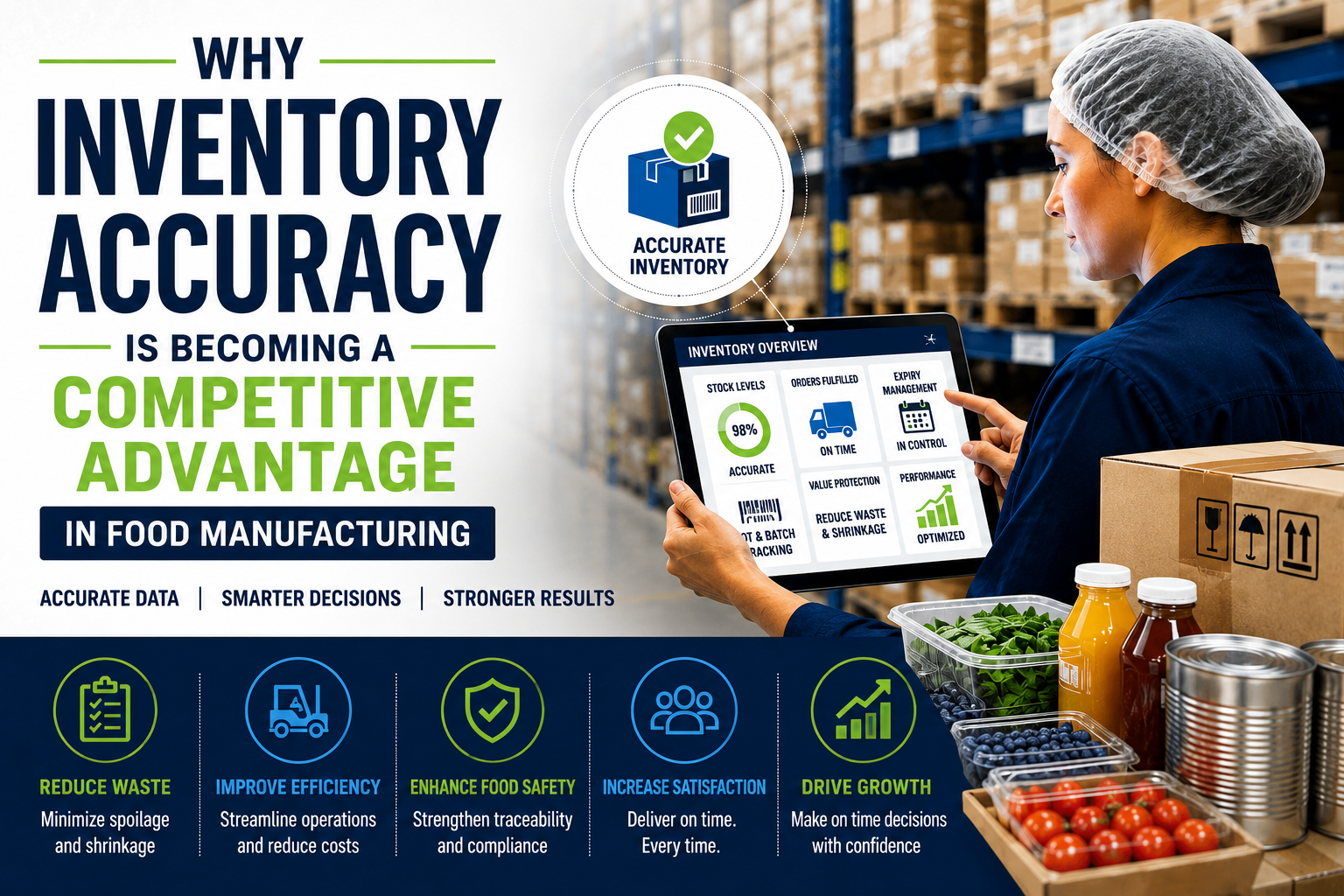
Inventory accuracy has always been important for food and beverage manufacturers, but in 2026 it has become a critical driver of profitability, customer satisfaction, and operational efficiency.
As supply chains become more complex and consumer expectations continue to rise, manufacturers are finding that even small inventory discrepancies can create significant challenges. From production delays and stock shortages to excess inventory and food waste, inaccurate inventory data can impact every area of the business.
Organizations that prioritize inventory accuracy are gaining a competitive advantage through better visibility, improved decision-making, and stronger operational performance.
What Is Inventory Accuracy?
Inventory accuracy refers to how closely recorded inventory matches actual physical inventory. For food and beverage manufacturers, accurate inventory records help support production planning, purchasing, distribution, demand forecasting, customer fulfillment, food safety, and traceability.
When inventory records are inaccurate, organizations often face unnecessary costs, inefficiencies, and disruptions that can affect both profitability and customer satisfaction.
The Cost of Inventory Inaccuracy
Even minor inventory discrepancies can create major operational challenges for food manufacturers.
Stockouts
Inaccurate inventory counts can result in unexpected shortages that disrupt production schedules and delay customer orders.
Excess Inventory
Overestimating demand or maintaining inaccurate records can lead to excess stock, increased carrying costs, and product expiration.
Increased Food Waste
For perishable products, inventory inaccuracies often contribute to spoilage, shrinkage, and unnecessary waste.
Reduced Customer Satisfaction
Customers expect consistent product availability and reliable delivery schedules. Inventory issues can negatively affect customer relationships and brand reputation.
Why Inventory Accuracy Matters in 2026
Several industry trends are making inventory accuracy more important than ever for food and beverage manufacturers.
Rising Consumer Expectations
Consumers expect products to be available when and where they need them. Manufacturers must maintain accurate inventory information to meet these expectations.
Supply Chain Volatility
Transportation challenges, supplier disruptions, and market fluctuations require organizations to make faster and more informed decisions.
Traceability Requirements
Accurate inventory records support stronger traceability initiatives and improve recall readiness.
Margin Protection
Reducing inventory errors can help organizations lower costs, reduce waste, and improve profitability.
Best Practices for Improving Inventory Accuracy
Leading manufacturers are implementing several strategies to improve inventory performance and reduce operational risk.
- Conduct regular cycle counts: Frequent inventory audits help identify discrepancies before they become larger problems.
- Standardize inventory processes: Consistent receiving, storage, and fulfillment procedures improve accuracy across facilities.
- Improve warehouse organization: Well-organized warehouses reduce errors and improve inventory visibility.
- Strengthen supplier communication: Better collaboration with suppliers helps improve inbound inventory accuracy and forecasting.
- Monitor key performance indicators: Metrics such as inventory turnover, fill rates, cycle count accuracy, and shrinkage rates provide valuable insight into operational performance.
Inventory Accuracy and Food Safety
Inventory accuracy plays a significant role in food safety and quality assurance. Manufacturers that maintain accurate inventory records can improve lot tracking, support recall management, enhance traceability, reduce compliance risks, and strengthen product quality control.
These capabilities are increasingly important as regulations evolve and consumer expectations grow.
The Connection Between Visibility and Growth
Inventory accuracy is more than an operational metric. It is a strategic advantage.
Organizations with reliable inventory information can respond faster to changing market conditions, optimize resources, improve customer service, and reduce costly errors.
For more food manufacturing insights, visit the InfoBate News Center.
Looking Ahead
As the food and beverage industry continues to evolve, inventory accuracy will remain a key priority for manufacturers seeking to improve efficiency, reduce waste, and strengthen customer relationships.
Companies that focus on visibility, accountability, and continuous improvement will be better positioned to compete in an increasingly complex marketplace.
The organizations that treat inventory accuracy as a strategic initiative rather than a routine operational task will be the ones best prepared for future success.
To explore more industry trends, read our related article on building a more resilient food supply chain in 2026.