The convenience store industry continues to evolve beyond the traditional quick-stop model.
As 2027 planning gets underway, CPG suppliers serving the convenience channel are preparing for a marketplace shaped by changing consumer expectations, expanding foodservice, digital loyalty, greater pressure on value, increasingly sophisticated retail technology, and more data-driven decision-making.
For suppliers, these convenience store industry trends have implications far beyond product development. They can influence assortment decisions, trade programs, retailer relationships, distribution strategies, promotional investments, and the data required to demonstrate performance.
The convenience channel also remains enormous. The United States has 151,975 convenience stores, according to the 2026 NACS/NIQ TDLinx Convenience Industry Store Count.
As the industry prepares for 2027, here are the trends CPG suppliers should be watching most closely.
1. Foodservice Continues to Reshape the Convenience Store
Foodservice has become one of the most important areas of convenience retail.
According to NACS State of the Industry data, foodservice accounted for 28.5% of convenience store in-store sales in 2025 and 38.9% of in-store gross profit dollars.
Prepared food represents the majority of foodservice sales, while convenience retailers continue investing in meals, snacks, beverages, and fresh offerings that give consumers additional reasons to visit.
For CPG suppliers, c-store foodservice growth creates both opportunities and competitive pressure.
As retailers allocate more attention and space to foodservice, traditional merchandise categories need to demonstrate their contribution to:
- Basket size
- Store traffic
- Category growth
- Consumer missions
- Repeat visits
- Profitability
This makes store-level sales, product velocity, distribution, and category performance increasingly important when suppliers compete for assortment and shelf space.
2. Value Is Being Redefined
Consumers remain highly conscious of what they spend.
Recent NACS shopper research found that 39.8% of convenience shoppers changed how they shop the channel because of their financial situation. Among shoppers changing their behavior, many reported choosing less expensive alternatives or reducing purchases they previously made regularly.
This means value in convenience retail in 2027 will extend beyond simply offering the lowest price.
Retailers and suppliers will need to consider:
- Promotional value
- Product quality
- Convenience
- Pack size
- Loyalty rewards
- Bundled offers
- Relevant assortment
CPG suppliers should evaluate which products and promotions resonate with increasingly selective shoppers rather than assuming historical purchasing behavior will continue unchanged.
3. Digital Loyalty Becomes More Important to Retail Strategy
Loyalty programs are becoming increasingly influential in convenience retail.
NACS research published in September 2026 found that nearly one-third of consumers said they choose a particular convenience store because of its loyalty program.
Separate NACS shopper research found that 63.3% of consumers reported using loyalty programs, coupons, or promotions in 2025 to help manage spending.
For CPG suppliers, this creates an opportunity to think differently about promotions.
Instead of evaluating only broad promotional sales, suppliers may increasingly need to understand:
- Offer redemption
- Repeat purchasing
- Consumer segments
- Promotion participation
- Incremental sales
- Basket behavior
- Post-promotion performance
The ability to connect promotional activity with measurable consumer and retail outcomes can strengthen conversations with retail partners.
4. Promotions Become More Targeted and Measurable
Digital engagement also raises expectations for trade promotion measurement.
Retailers and CPG suppliers increasingly have opportunities to evaluate not just whether a promotion occurred, but whether it generated measurable incremental performance.
That means asking questions such as:
- Which stores participated?
- Was promotional pricing executed correctly?
- Did product velocity increase?
- Was the product consistently available?
- Did the promotion generate incremental sales?
- What happened after the promotion ended?
- Was the investment profitable?
Suppliers that can answer these questions have a stronger foundation for future trade decisions.
For more guidance, read Building More Effective Trade Programs: A Practical Guide for CPG Companies.
5. Store-Level Visibility Becomes More Valuable
Chain-wide sales numbers remain useful, but they do not always reveal where opportunities exist.
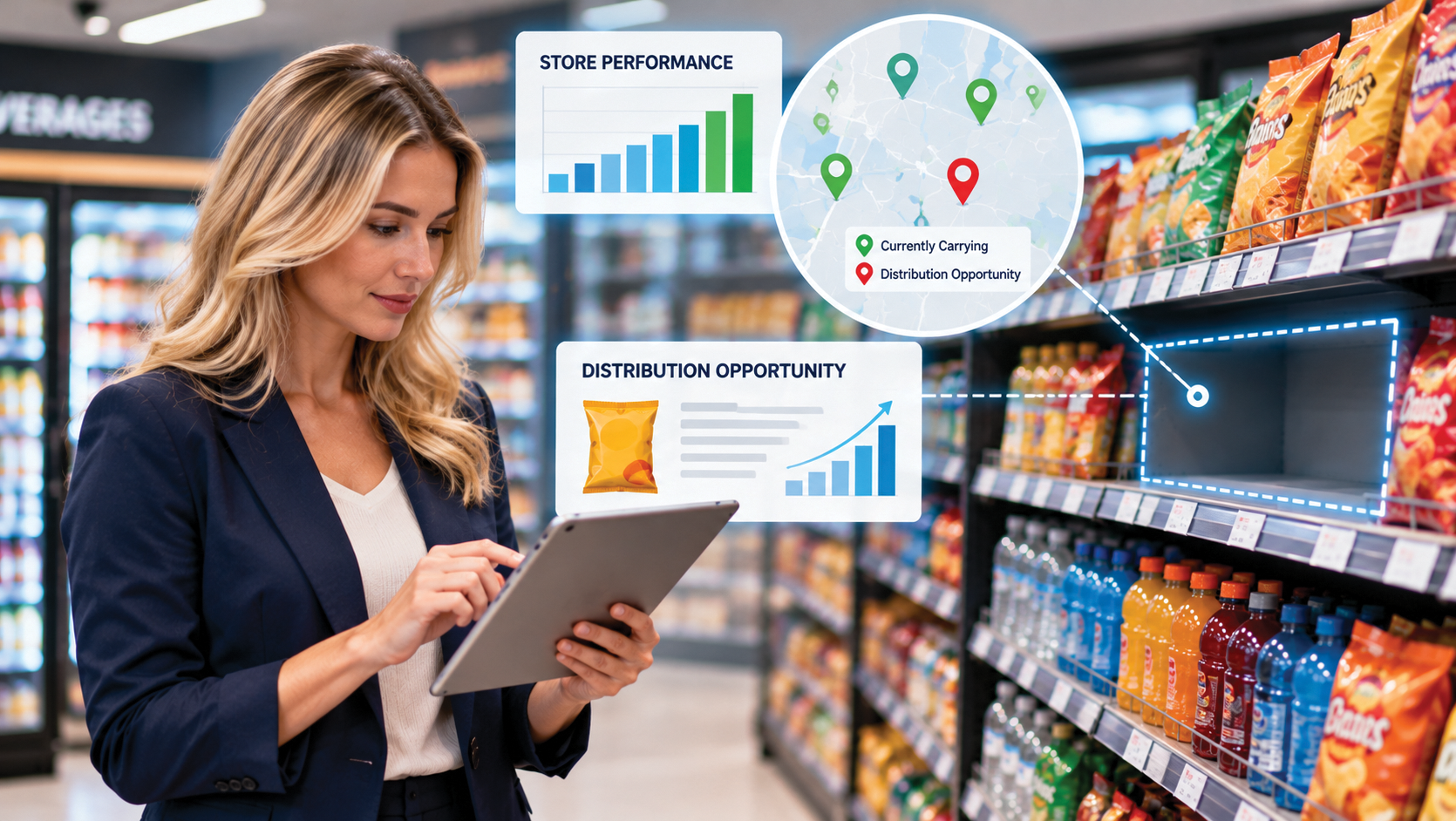
Store-level retail data can help CPG suppliers identify:
- High-performing stores
- Underperforming locations
- Product voids
- Distribution gaps
- Potential availability problems
- Regional differences
- Promotional execution issues
For example, a product may perform well across a retail chain while remaining unavailable in stores with similar shopper profiles and category performance.
Those locations may represent opportunities for additional distribution.
As retailers become more sophisticated about assortment and space allocation, suppliers will need equally detailed evidence to support recommendations.
Read How Convenience Stores Are Using Data to Improve Profitability in 2026 for more on store-level analytics.
6. Product Availability Remains Critical
CPG suppliers can invest heavily in marketing and promotions, but those investments lose value when consumers cannot find the product.
Better retail data can help identify unusual sales patterns that may indicate:
- Out-of-stock conditions
- Distribution losses
- Assortment changes
- Execution problems
- Store-specific performance issues
In 2027, suppliers should increasingly connect sales, distribution, promotion, and availability information instead of analyzing each independently.
7. Convenience Retail Becomes More Digitally Connected
The digital transformation of convenience retail extends beyond loyalty.
Retailers are increasingly connecting mobile engagement, payments, ordering, loyalty, consumer communication, and other digital experiences.
For CPG suppliers, a more connected retail environment can generate additional signals about how consumers interact with products and promotions.
The challenge will be turning those signals into useful insights rather than simply accumulating more information.
A strong CPG data strategy should help teams determine:
- Which information matters
- How different sources connect
- Which benchmarks provide context
- Which changes require attention
- What action should happen next
For a practical framework, read Turning Retail Data Into Actionable Insights: A Guide for CPG Teams.
8. Retailer and Distributor Relationships Carry More Strategic Weight
The convenience channel continues to evolve through acquisitions, strategic partnerships, and changes in distributor and retailer networks.
For CPG suppliers, the practical implication is straightforward: major customer and distributor relationships can represent substantial portions of channel performance.
Suppliers need visibility into:
- Sales by retailer
- Sales by distributor
- Distribution growth
- Product mix
- Retailer participation
- Trade program performance
- Geographic performance
Better account-level visibility helps suppliers identify risks and opportunities before they become obvious in total company sales.
Learn more in How CPG Suppliers Can Improve Retailer Relationships in 2026.
9. Business Intelligence Moves From Reporting to Opportunity Identification
Traditional retail reporting primarily answers questions about what already happened.
Modern CPG business intelligence needs to help teams determine what to do next.
Instead of only asking:
How much did we sell?
CPG suppliers should increasingly ask:
- Where should distribution expand?
- Which stores represent the greatest opportunity?
- Which products are losing momentum?
- Where could availability be affecting sales?
- Which retailer programs generate the strongest results?
- Which distributor relationships have untapped growth potential?
This transition from reporting to opportunity identification may be one of the most important convenience store industry trends heading into 2027.
10. AI Adds Another Layer to Retail Analytics
Artificial intelligence will continue influencing how CPG and retail organizations analyze large volumes of information.
Potential applications include:
- Demand forecasting
- Historical trend analysis
- Product opportunity identification
- Consumer behavior analysis
- Promotion analysis
- Anomaly detection
- Retailer segmentation
The value of AI still depends on the quality and context of the underlying data.
For CPG suppliers, the objective should not be to add AI simply because it is available. The objective should be using analytics to surface opportunities that help teams make better decisions.
What CPG Suppliers Should Do Now
Preparing for 2027 does not require predicting every change in convenience retail.
Instead, suppliers can focus on building the visibility and processes needed to respond quickly.
Improve Store-Level Visibility
Understand performance beyond national, distributor, and chain-level totals.
Track Distribution and Product Availability
Identify where successful products may be underrepresented or unavailable.
Connect Promotions With Retail Execution
Measure whether agreed programs actually occurred and whether they generated incremental results.
Use Historical Data as Context
Compare current performance with previous periods, seasons, retailers, and promotions.
Strengthen Retailer and Distributor Analytics
Know which partners, products, markets, and programs are driving growth.
Turn Data Into Recommended Actions
A useful insight should identify what happened, why it matters, where it happened, and what teams should investigate next.
InfoBate Is Heading to NACS Show 2026
These trends will be especially relevant next week as the convenience and fuel retailing industry gathers in Las Vegas for the 2026 NACS Show, October 6 through 9 at the Las Vegas Convention Center.
InfoBate will be attending NACS Show 2026 and looks forward to connecting with CPG manufacturers, suppliers, distributors, retailers, and other industry professionals.
With the convenience channel changing quickly, NACS provides an opportunity to compare perspectives on the trends shaping 2027, including retail analytics, trade programs, store-level visibility, distributor relationships, digital engagement, and the increasing importance of actionable data.
If you will be at NACS and want to discuss how your organization is using retail data to identify opportunities and improve performance, we would welcome the conversation.
Looking Ahead to Convenience Retail in 2027
The convenience store of 2027 will continue to be defined by more than speed and location.
Foodservice is becoming a larger part of the business. Consumers are demanding stronger value. Loyalty is becoming more influential. Retail experiences are increasingly connected. Suppliers and retailers have access to more data than ever.
For CPG suppliers, the challenge is connecting those developments into a clear picture of performance.
The companies positioned to succeed will not necessarily be those with the most data. They will be the companies that can identify which information matters, understand what it means, and translate it into action.
That makes visibility an increasingly important competitive advantage in convenience retail in 2027.
InfoBate gives CPG suppliers store-level visibility into retail performance, helping teams identify distribution opportunities, evaluate trade programs, understand distributor and retailer performance, and navigate an increasingly complex convenience channel.
Explore more convenience retail, CPG analytics, and trade program insights in the InfoBate News Center.
Frequently Asked Questions About Convenience Store Industry Trends
What are the biggest convenience store industry trends for 2027?
Key trends include continued foodservice growth, stronger consumer focus on value, deeper integration of digital loyalty, more measurable promotions, greater use of store-level data, increased digital connectivity, evolving retailer and distributor relationships, and greater use of business intelligence and AI.
How does foodservice growth affect CPG suppliers?
As convenience retailers dedicate more attention and space to prepared food and other foodservice offerings, traditional merchandise categories face greater pressure to demonstrate sales velocity, category contribution, consumer demand, and profitability.
Why are loyalty programs important to convenience retail?
Loyalty programs can encourage repeat visits while giving retailers additional ways to provide personalized value, promotions, and rewards. For suppliers, loyalty-related insights can also provide additional context for measuring promotional performance.
Why does retailer and distributor consolidation matter for CPG suppliers?
When significant portions of channel sales are concentrated among major retailers or distributors, the performance of individual relationships carries greater business impact. Account-level and distributor-level analytics can help suppliers identify risks and opportunities earlier.
How can CPG suppliers use store-level data?
Store-level data can help identify product voids, distribution opportunities, high-performing locations, underperforming stores, potential availability issues, regional trends, and differences in promotional execution.
How will AI affect convenience retail in 2027?
AI can help organizations analyze historical and current data for forecasting, consumer behavior, promotion analysis, anomaly detection, and opportunity identification. Its effectiveness depends heavily on having accurate, well-structured underlying data.
When is the 2026 NACS Show?
The 2026 NACS Show takes place October 6 through 9 at the Las Vegas Convention Center in Las Vegas, Nevada. InfoBate plans to attend the event.